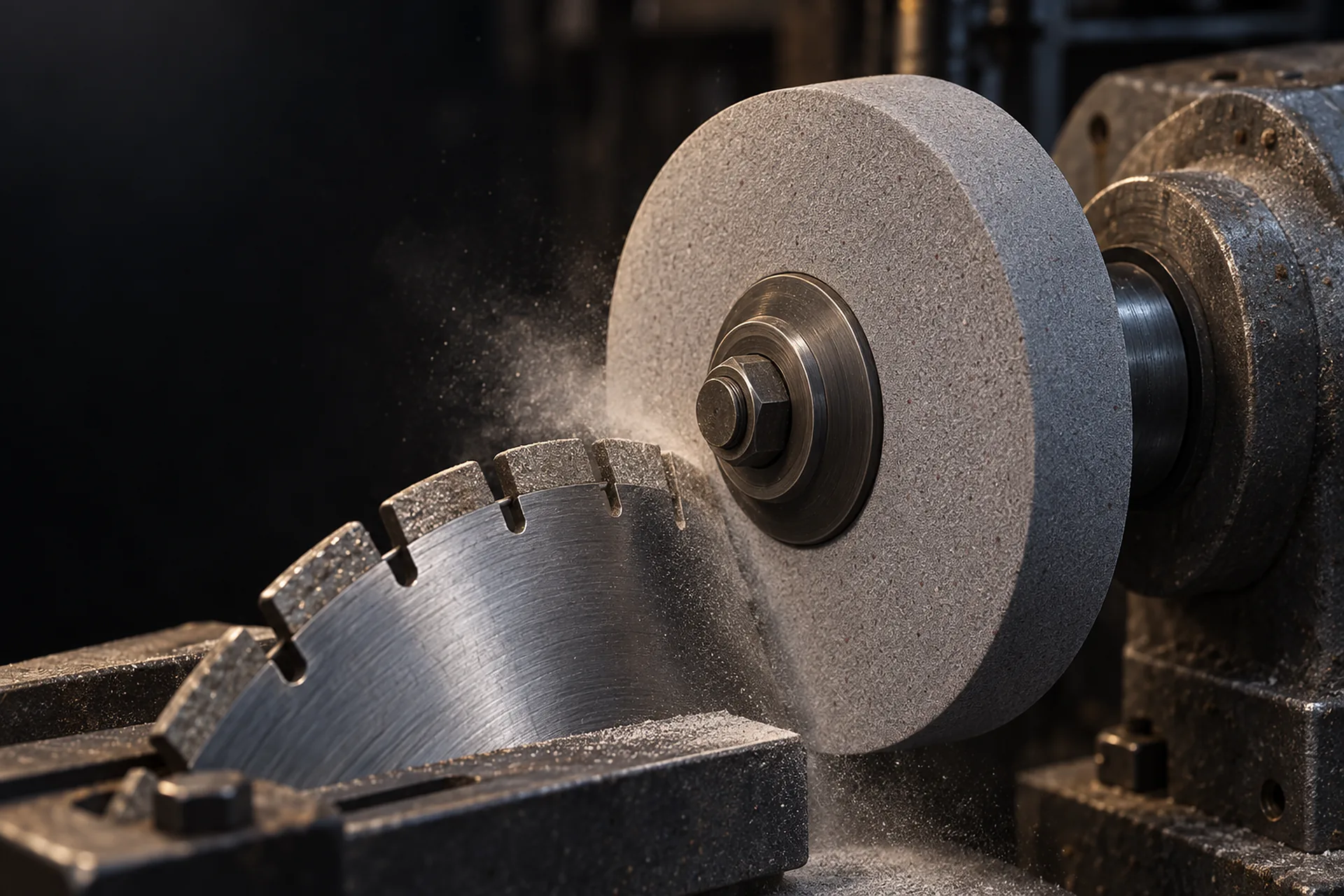

Simaflex cylindrical aluminium oxide wheel on a dressing bench, truing the rim of a diamond blade
Dressing and truing · aluminium oxide

Dressing and truing wheels for diamond tools, in aluminium oxide and silicon carbide

The wheel that does not work the stone but the tool: in aluminium oxide, for cleaning and re-opening diamond blades and wheels that have stopped cutting. Six diameters, bore and width to your size, grits from A16 to A220.
what it does

When the diamond is there but no longer cuts.

A diamond blade does not wear like an abrasive wheel: the diamonds stay, but the bond that holds them glazes over and covers them, and the tool skids instead of cutting. There is no need to scrap it: it needs dressing. The aluminium oxide wheel wears away the bond at the surface, exposes fresh diamonds and brings the blade back to cutting as it did when new.

That is why this family is unlike every other in our range of abrasive wheels: here the wheel runs against the tool, not against the piece. We make it cylindrical, in aluminium oxide grit, in several hardness grades to suit the operation.

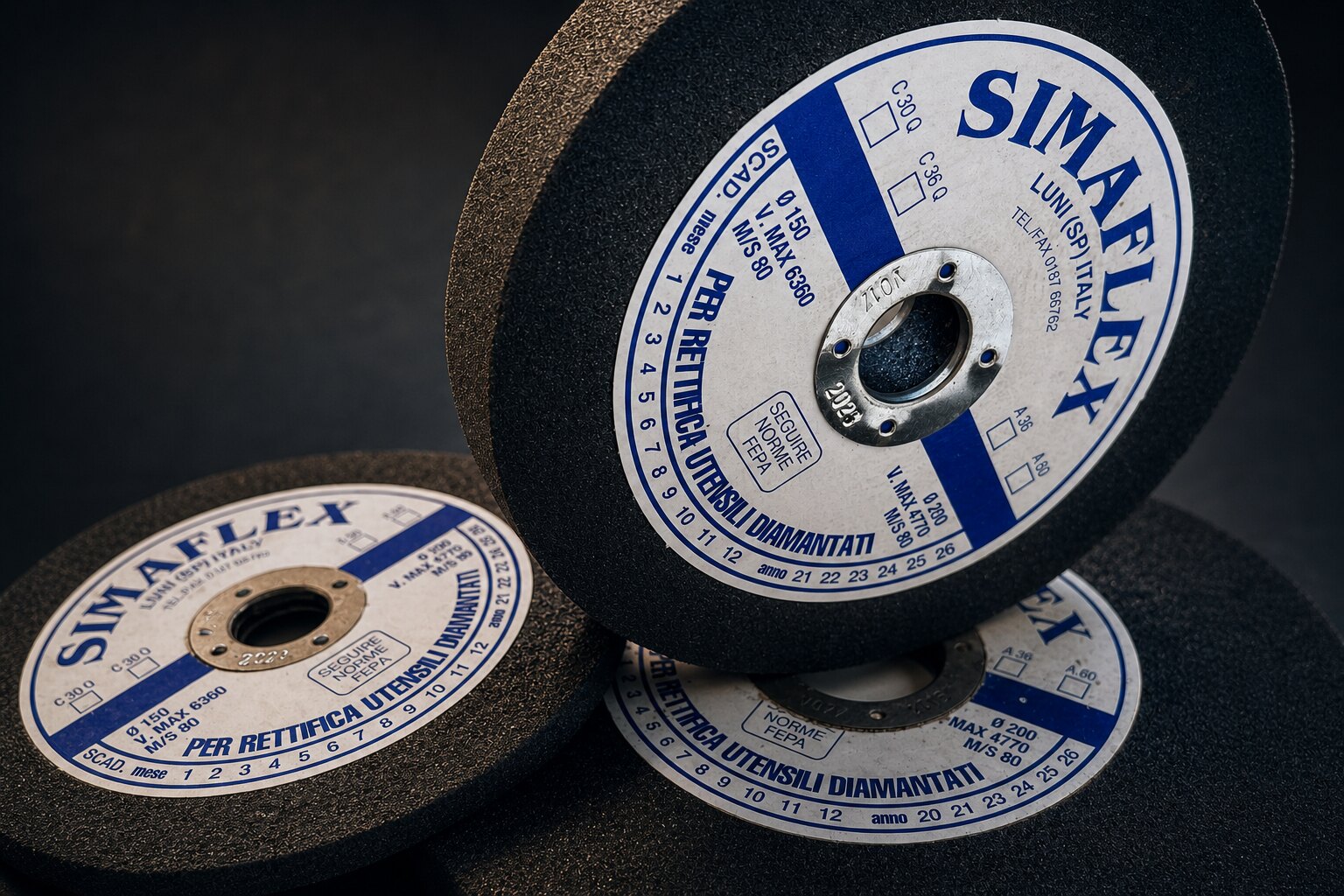
Simaflex cylindrical aluminium oxide wheels for dressing and truing diamond tools, catalogue photo
dressing wheels · Simaflex catalogue
the sizes

Ø 150, 200, 250 and 300, 350, 400: bore and width to your size

Two series of diameters, all with bore and width to the customer's specification.

DiameterBoreWidth
Ø 150 · 200 · 250from 20 mm to 60 mm, to orderfrom 2 mm to 150 mm, to order
Ø 300 · 350 · 400from 20 mm to 60 mm, to orderfrom 2 mm to 150 mm

We machine the bore to the spindle of your machine; the width to the width of the tool to be dressed.

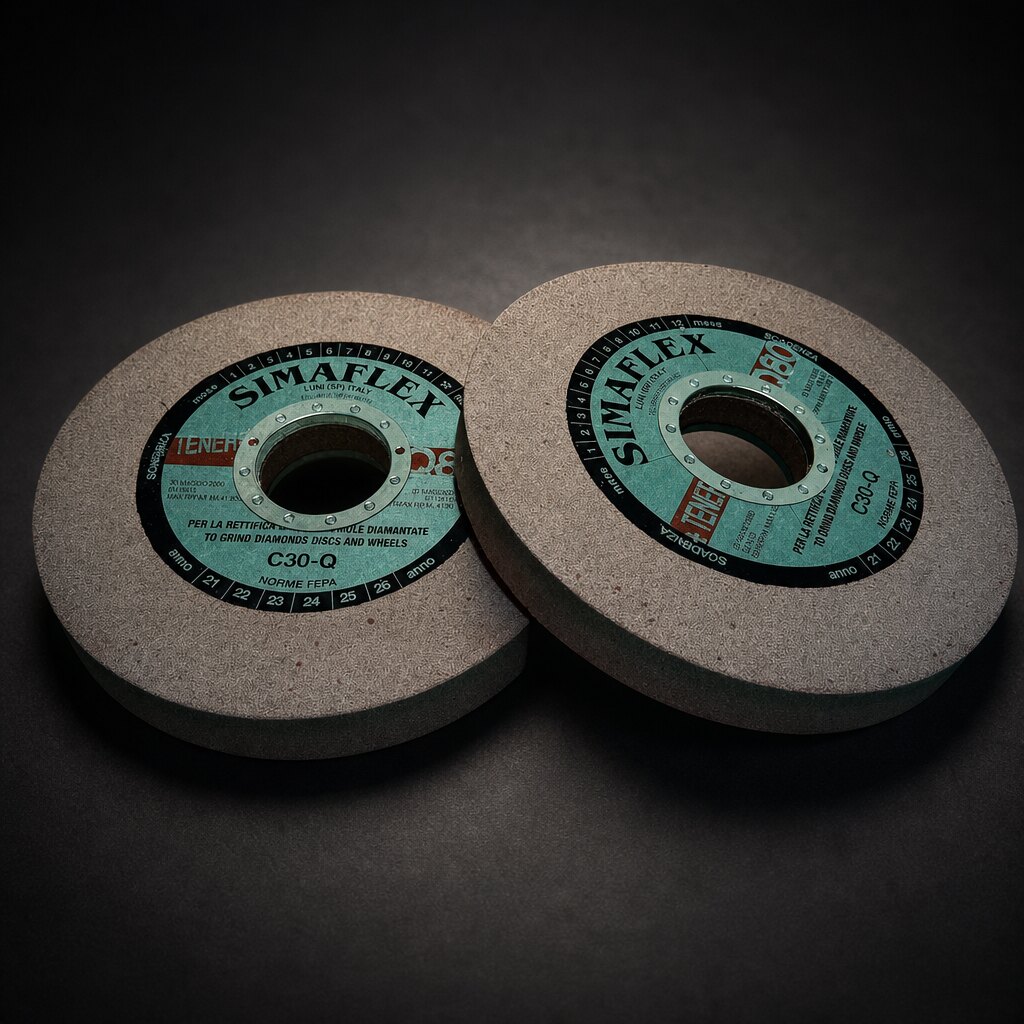
Simaflex C30 cylindrical aluminium oxide wheel for dressing diamond tools, with the product label
C30 wheel · Simaflex catalogue
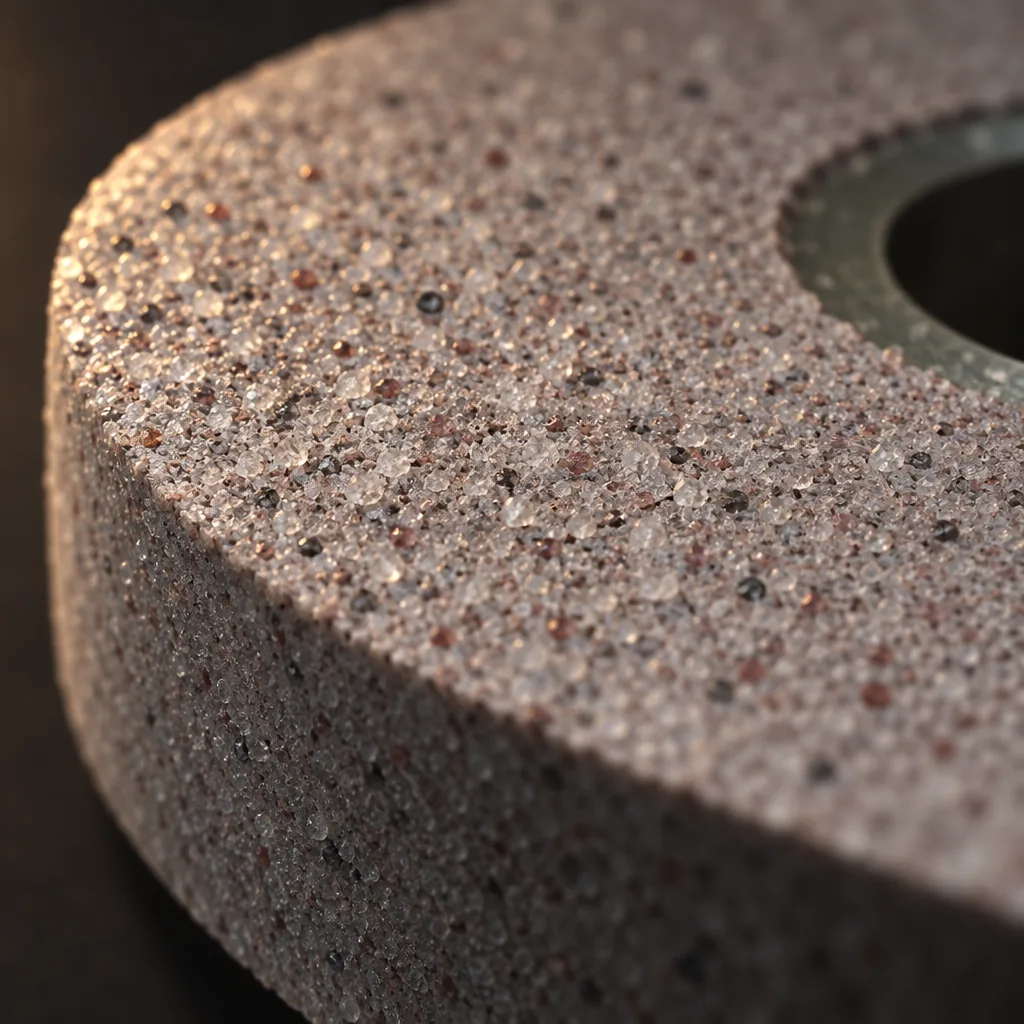
Macro of the pinkish-grey aluminium oxide grit on the face of a Simaflex dressing wheel
the grits

Aluminium oxide grits

Aluminium oxide is corundum: tougher than silicon carbide, it is the right grain for attacking a metal or resinoid bond without crumbling. Grits from A16 to A220, in three ranges:

Available in several hardness grades, to suit the operation. If you are not sure which grit your blade needs, call us with the type of tool and the bond: we tell you where to start.

how it is used

Dressing, truing, sharpening: what the wheel does to the tool

Three words for three jobs on the same machine.

  • Dressing: removing the bond that covers the diamonds and bringing the tool back into cut. It is the most frequent use, and it is repeated every time the blade starts to skid.
  • Truing: bringing a blade or wheel that has worn unevenly back flat and round, so that it runs without vibration.
  • Sharpening: restoring the cutting edge on a segmented diamond tool when the edge has rounded off.
in short
How do you dress a diamond blade?

You run the blade against an aluminium oxide or silicon carbide abrasive wheel, at low pressure, for a few passes. The wheel wears away the bond at the surface and exposes the fresh diamonds underneath: the blade cuts again. Repeat whenever the tool skids on the piece instead of biting into it.

The Simaflex aluminium oxide wheel in contact with the rim of a diamond blade on the dressing bench
the wheel against the tool, not against the piece
the machines

Which machines it fits

The cylindrical wheel works on bench dressing machines and on spindles where the diamond blade runs against it. The 20 to 60 mm bore covers the most common spindles; for those outside that range we machine the bore to drawing.

For every other stone operation, the right wheel is on another page: the cup wheels for chamfers, the edge and profile wheels for the edge, the semi-flexible discs for the angle grinder.

Simaflex aluminium oxide wheel dressing a diamond blade on the bench, portrait framing
on the dressing bench
outside the table

Diameter, bore or width outside the table?

We make dressing wheels to measure as well: send us the spindle dimensions and the width of the tool, and we come back to you with the right wheel.